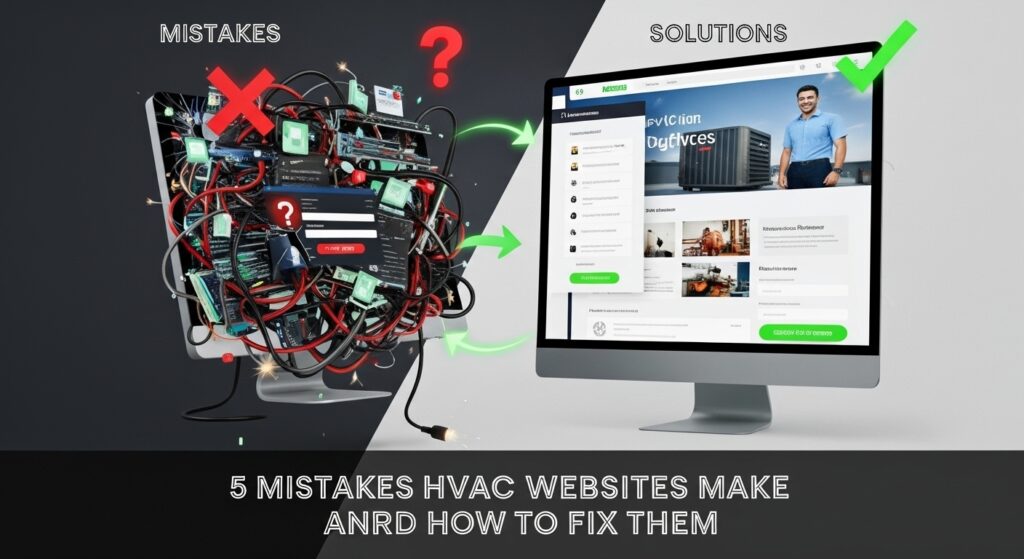
A strong online presence is now essential for HVAC businesses in the USA, UK, and Australia. Homeowners rely on search engines to find heating and cooling services, compare local companies, and check credibility before making a call. Yet many HVAC websites unintentionally turn customers away. These issues often seem small but can directly affect search rankings, trust, and the number of service bookings you receive.
1. Slow Website Speed
One of the most common HVAC website problems is slow loading time. When a page takes too long to open, people leave. Search engines also lower the ranking of slow sites. Speed matters because customers looking for AC repair or heating services want fast answers. Improving hosting quality, compressing images, and reducing heavy scripts can make a noticeable difference.
2. No Clear Call to Action
Many HVAC websites describe their services well but never clearly tell users what to do next. A simple and visible call to action such as “Call Now,” “Request a Quote,” or “Book a Technician” helps guide visitors. When someone needs urgent AC or furnace help, a direct button can turn hesitation into action.
3. Poor Mobile Experience
Most heating and cooling searches come from mobile phones. If your HVAC website is difficult to use on a small screen, customers will move on to a competitor. A mobile-friendly design improves readability, navigation, and user comfort. It also helps Google understand that your site offers a positive experience, which supports stronger rankings.
4. Lack of Local SEO Content
Many HVAC businesses miss the opportunity to target local search terms such as “HVAC repair near me,” “AC installation in Sydney,” or “furnace service London.” Local keywords help search engines connect your business to nearby users. Adding suburb pages, service-area maps, and location-specific wording can improve visibility for high-intent local searches.
5. Missing Trust Elements
Homeowners want to feel confident before booking heating or cooling services. Without customer reviews, technician photos, licenses, or service guarantees, an HVAC website can feel incomplete. Trust elements reassure people that they are dealing with qualified professionals. Displaying testimonials, certifications, and before-and-after project photos helps build confidence quickly.
Key Points to Remember
- Website speed has a direct impact on customer behaviour and search rankings.
- Clear calls to action lead to more HVAC bookings.
- Mobile-friendly design is essential for modern users.
- Local SEO improves visibility in nearby service areas.
- Trust elements such as reviews and certifications help convert visitors into customers.
FAQs
1. Why is website speed important for HVAC businesses?
Fast websites help customers get the information they need quickly and improve your ranking on Google.
2. How can HVAC companies improve mobile user experience?
Use responsive design, simplified layouts, and easy navigation so mobile users can find services without frustration.
3. What is local SEO for HVAC services?
It means adding location-based keywords and pages to help customers find you when they search for local heating or cooling services.
4. How do trust elements help HVAC websites convert better?
Reviews, certifications, and technician details help customers feel secure about booking.
5. What is the best call to action for an HVAC website?
Simple options like “Call Now,” “Book Service,” or “Get a Quote” work well because they reduce confusion and guide users.
If you’re looking to improve your hvac website and avoid these common mistakes, we can help you upgrade your design, structure, and visibility so you attract more local customers. Learn more about how Creative Web Guys can support your HVAC business online.