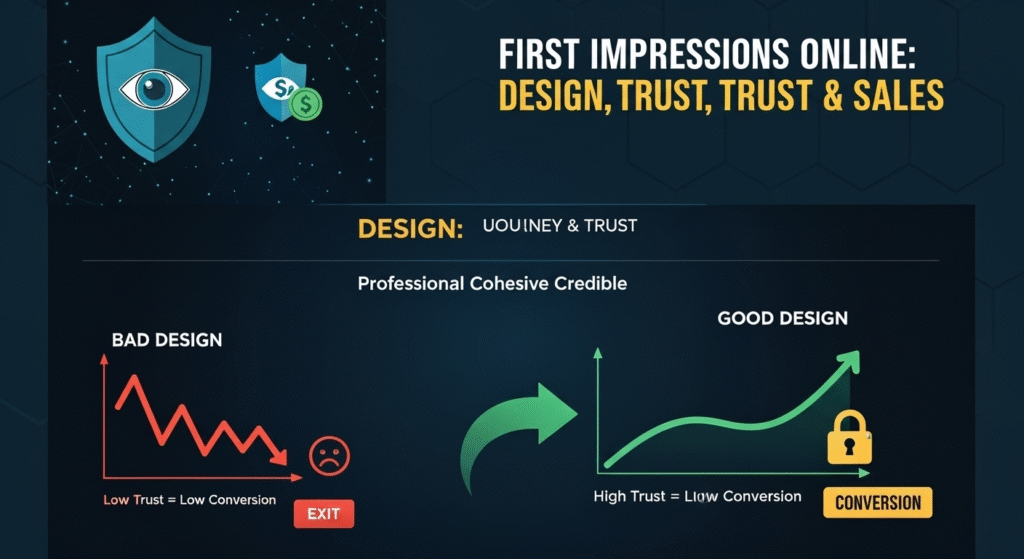
When a visitor lands on your website, their mind begins making judgments within seconds. Before reading a single line of text, they’ve already formed an opinion about your business. Design plays a major role in shaping that first impression and that impression often determines whether a user stays, clicks, or leaves.
Why First Impressions Matter in Web Design
Research shows that users form an opinion about a website in less than one second. That first visual impact influences their trust, perception of credibility, and decision to engage. If the design looks outdated, cluttered, or inconsistent, visitors subconsciously link those qualities to the brand itself.
Good design builds confidence. It communicates professionalism, stability, and care all of which are critical for converting visitors into customers. In digital marketing, this is called the “trust factor,” and it often matters more than the product or price in the early moments of a user’s journey.
The Psychology Behind User Trust
Our brains are wired to process visuals faster than text. Clean layouts, clear structure, and balanced colors help reduce cognitive load, making users feel comfortable and in control. On the other hand, poor design creates mental friction, triggering doubt or confusion.
Consistency across your logo, colors, fonts, and messaging reinforces brand identity. When people see familiar patterns, their brain interprets it as reliability. That’s why strong brands from local cafés to global companies maintain a cohesive design system online.
Design and Its Impact on Sales
A well-designed website does more than look good it guides users toward action. Elements such as whitespace, hierarchy, and contrast direct attention to key areas like “Contact Us” or “Buy Now.”
Studies show that users are more likely to purchase or inquire from websites that appear professional and easy to use. Even small improvements, like faster loading times, mobile responsiveness, and intuitive navigation, can significantly increase conversion rates.
Trust directly affects sales performance. A clean, organized site signals that a business values its customers’ experience, while a poorly designed one implies neglect or risk. In short, design is not just aesthetic it’s a business strategy.
Key Points to Remember
- Users judge a website within the first second of viewing it.
- Visual design strongly influences trust and credibility.
- Consistency across all elements builds a reliable brand identity.
- Good design simplifies decision-making and boosts conversions.
- Investing in user-centered design is investing in sales growth.
Frequently Asked Questions
1. How does web design affect user trust?
A visually appealing and consistent design helps users feel that your business is credible and reliable. Poor visuals, broken links, or clutter can immediately erode trust.
2. What design features improve conversion rates?
Fast loading times, mobile-friendly layouts, clear calls to action, and balanced spacing between elements all improve user engagement and conversions.
3. How important is color psychology in web design?
Color influences emotion and perception. For example, blue often conveys trust, while red encourages action. Choosing the right palette can subtly guide user behavior.
4. Should small businesses invest in professional design?
Yes. A professional website design often pays for itself by improving credibility, reducing bounce rates, and increasing sales inquiries.
5. What is the link between design and SEO performance?
Google favors sites that are user-friendly, responsive, and visually organized. A good design helps improve site structure, dwell time, and search visibility.