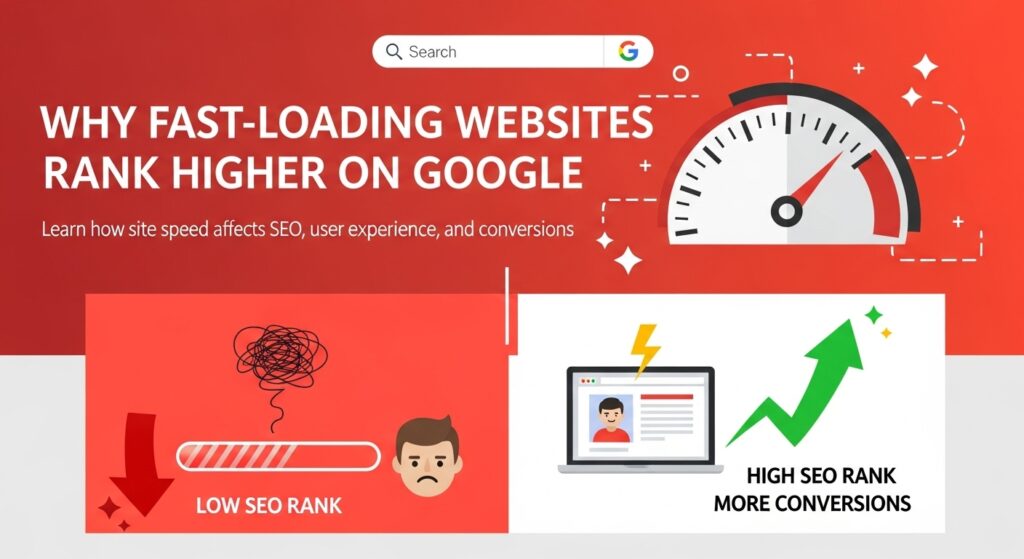
Learn how site speed affects SEO, user experience, and conversions
When visitors land on your website, they expect it to load quickly. If your pages take too long to open, many users will leave before they even see your content. A slow website not only frustrates people but also affects your search engine ranking.
Google treats page speed as an important ranking factor because it directly influences user experience. Websites that load faster are easier to navigate, keep visitors engaged, and bring better results. In simple terms, a faster site helps you attract more visitors and turn them into customers.
How Site Speed Impacts SEO
Search engines look at how users behave when they visit your site. If users click away because your website is slow, it signals a poor experience. Over time, this can lower your visibility in search results. A fast website improves your Core Web Vitals, which are metrics that measure how efficiently your site performs.
Improving speed often means compressing images, cleaning up unnecessary code, using browser caching, and choosing reliable hosting. These small steps can have a big impact on how search engines rank your pages.
User Experience and Retention
Site speed has a strong connection with how long users stay on your website. When your pages load quickly, visitors spend more time exploring your content. This reduces bounce rates and increases engagement, which both help your SEO performance.
For local businesses, this can be the difference between a visitor becoming a lead or leaving before contacting you. A faster site helps you hold attention and guide users to the next step.
Conversions and Revenue
A faster website not only ranks better but also converts better. Every second of delay can reduce conversions by several percent. That means a short delay can cost real opportunities and income.
When your website loads fast, it builds trust and helps visitors take action, whether that is filling out a form, calling your business, or making a purchase.
Key Points to Remember
Website speed is a key factor in Google rankings
- Faster pages help reduce bounce rates and increase engagement
- Core Web Vitals measure performance and responsiveness
- Image compression, caching, and clean code improve loading time
- A fast site improves user satisfaction and conversions
FAQs
1. Why does website speed affect SEO?
Because search engines prioritize pages that give users a better experience. A slow site causes visitors to leave, which lowers rankings.
2. What is the ideal load time for a website?
Try to keep it under three seconds. Anything slower can reduce user engagement and conversion rates.
3. How can I test my site speed?
You can use tools like Google PageSpeed Insights, GTmetrix, or Pingdom to check your speed and get improvement suggestions.
4. Does faster loading really increase sales or leads?
Yes, studies show that faster sites generate higher conversion rates and better user engagement.
5. What are the main causes of slow websites?
Large image files, too many plugins, poor hosting, and unoptimized code are the most common reasons.